First, I went to a juku class, or a cram class. These take over children's. 75% of students attend these juku classes. They go from a range of one hour, to three forcing children to learn for an insane period of time. These children can do nothing except learn learn learn. Teachers hate it, children hate it, even parents hate it? But the government is forcing it.
Then came graduation. I thought it odd that the whole school would practice for hours just for a graduation ceremony. And the speeches. They weren't very good. They were generic and could be used for anything. I also don't get why the children 'partying' at 2:30 in the afternoon got in trouble. They didn't do anything wrong.
The source of entertainment has changed from television to music. Music is very entertaining, however I don't see how it can be the sole source of entertainment for children. These people are going to change life for all of Japan.
The cherry blossom festival was beautiful, but I do agree with Cho. It is a shame that this little town is using Japans oldest remains as a way to get tourists. Before then, Japan had left a good mark on me, but after it, I'm not so sure. Sure, the natural resources are gone, but that is no excuse to celebrate Japans oldest remains as a hero. The only thing he did was keep his bones from disintegrating.
Friday, May 2, 2008

Monday, April 28, 2008
Winter
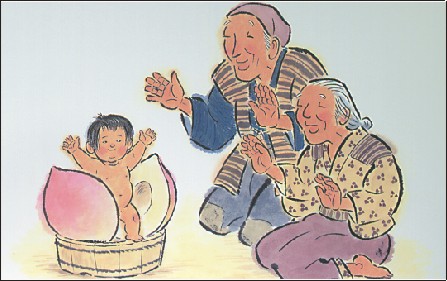

One of the first things that recently happened was my learning about 'Peach Boy,' a fairy tale. After I told a class about Paul Bunyan, The class was in disarray to act out the story of Peach Boy. Peach Boy defeated foreign devils with his companions: a monkey, a pheasant, and a dog. I do not know when this was first told, but I believe that these foreign devils were Americans. There is an old saying "Respect the emperor, throw out the barbarians." That is almost certainly referring to Americans. My guess is that this Peach Boy story was made by an emperor's story teller.
Next, I went to Tokyo. I had a go-con, which went horribly. In a go-con, two friends pick two other friends and all three usually end the night with a girlfriend/boyfriend. However, that night, my friend was engaged and the other man had a girlfriend. So I was left to flirt with three girls. I did not know who to pick. One was to quiet. One was always arguing, and one I didn't even learn the name of. We had no time to flirt either.
 Then I went skiing. I learned about Japanese spirit and how some younger Japanese were losing it. They were traveling around the world and coming back and being just like Westerners, which is the opposite of what Japanese want. These people need to accept other cultures, like we do in America. I'm not telling Japanese to be like Americans, but they should allow other cultures. For instance, there are emos, and we don't slander them all the time.
 Finally, I learned about teachers vs. mothers. It is exactly the opposite as it is with America and most Western countries. The teachers go to the parents instead of the parents going to the teachers. The students are told to study by the mother, not the teacher. Teachers give students more of a social life than the mothers do. Now, I'm not saying this is bad, because this has worked in the past, but right now, this is causing these 'rebellious' young Japanese because they don't have a strong relationship with their mother like the Americans do. The Japanese teachers should not have to go to the students house and do the reports they have to do, but otherwise, I see nothing wrong with what the teachers do. I see many things wrong with what the mothers do. The mothers force these extra jobs on the teachers because the mothers don't know how to teach their kids this stuff.
Wednesday, April 2, 2008
Last Day's of the Year
I was playing tennis with Mogi-sensei when I sprained my ankle. I thought I was really going to beat him but let's not talk about that. I went into the hospital and was tolled I had cancer. When I asked for Dr. Endo because he knew English, the doctor looked offended. But Dr. Endo agreed with the other doctor that I needed a cast and couldn't walk for a week. Then came the worst time: my colleagues deciding if I could go home. It didn't look good for me until my friends started showing up. I was brought crutches and allowed to go home.
Then came trash day. Every day at 8:30, every homeroom would something almost like meditation. Trash day was the first time I saw this happening. Every student cleans every day, but on a small scale. Every term, this time it's the winter term, homerooms, or kumis, would go and pick up trash in Sano. I went with Mrs. Negishi's kumi. I ended up making a game out of it: I-spy where students got points for saying the word in English.
Lunch is much more complicated in Japan than in America. A shy 7th grade boy asked me to go to his homeroom for lunch. In Japan, students do everything. One group organizes the room. One group gets the food. One group serves the food. That day, it was rice, salted cucumbers, oranges, and a beef stew. Denver told me to put rice, stew, and salad in my mouth at once and THEN chew. That seems outrages to me. Lunch is a lot bigger a deal in Japan.
Then there was the New Year's Ever festival, which I didn't much get, so I won't talk about it.
I think that the pre-school meditation is good for students. It loosens the mind for learning. It gets them in the mindset that school is starting, but it's not a big deal. It's a simple way to get the mind cleared of the things that aren't necessary that particular day. Students like it, and I know I like it, so teachers probably like it.
Then came trash day. Every day at 8:30, every homeroom would something almost like meditation. Trash day was the first time I saw this happening. Every student cleans every day, but on a small scale. Every term, this time it's the winter term, homerooms, or kumis, would go and pick up trash in Sano. I went with Mrs. Negishi's kumi. I ended up making a game out of it: I-spy where students got points for saying the word in English.
Lunch is much more complicated in Japan than in America. A shy 7th grade boy asked me to go to his homeroom for lunch. In Japan, students do everything. One group organizes the room. One group gets the food. One group serves the food. That day, it was rice, salted cucumbers, oranges, and a beef stew. Denver told me to put rice, stew, and salad in my mouth at once and THEN chew. That seems outrages to me. Lunch is a lot bigger a deal in Japan.
Then there was the New Year's Ever festival, which I didn't much get, so I won't talk about it.
I think that the pre-school meditation is good for students. It loosens the mind for learning. It gets them in the mindset that school is starting, but it's not a big deal. It's a simple way to get the mind cleared of the things that aren't necessary that particular day. Students like it, and I know I like it, so teachers probably like it.
Monday, March 31, 2008
The Fall trimester
The first few English classes at Sano Junior High in the fall trimester were the teacher inviting me to talk to the kids about America. When I tried to talk to them in English, they acted like if they did what I asked, they would be doing something wrong. Since I mentioned the students, I should mention what they are like. They are always attentive, never looking off the teacher. They memorize long speeches as homework. And then there's their uniform. The boy's uniform consists of a black blazer with brass buttons and a high neck, black pants and a pure white shirt with no wrinkles, no decoration, and no buttons on the collar. The girl's uniform consists of matching navy blue skirt and blazer, and the same white shirt. After my tryings to teach the Japanese students in the short amount of time I had, I went to my enkai. An enkai is like an acceptance/introduction where people drink heavily. I'm not allowed to talk about what happened at my enkai or after, because it would break my morals.
Then the sports festival happened. After the sports festival, I learned that women are a lot like children. Women are kept in order by somebody, and generally not allowed to wander without somebody to watch over them. In Japan, women are generally only good for cooking and cleaning, which would probably make them upset, but they don't voice their opinions, just like I realized at the sports festival. Girls were unhappy because they didn't get to do the pyramids, and boy's were unhappy because they DID get to do the pyramids. They didn't speak up, and when I did, the principal gave me some wild excuse about gaman, which means to persevere.
Then came leave watching which was uneventful and boring, so I will not talk about like I did with the enkai. I will say, however, that I questioned the relationship between Cho and Chieko.
I only reason I believe that these students are kept in such order is because adults are afraid. Afraid that some child might disappoint them. Afraid that some girl will not become a good wife, or that some boy will not turn out like his father. Adults are afraid that children will leave their homes in Japan and go west. Parents are afraid that their children will be like a westerner, and not be able to eat sushi because it's made of Japanese eel, or not be able to use chop sticks. America is not a very good example of what happens when you have children being free in schools, because half turn out to be high ranking officials, and some turn out to be workers in a candy making factory. But take that good half. These people did fine in a free school. With that said, what other reason is there to have a strict school?
Then the sports festival happened. After the sports festival, I learned that women are a lot like children. Women are kept in order by somebody, and generally not allowed to wander without somebody to watch over them. In Japan, women are generally only good for cooking and cleaning, which would probably make them upset, but they don't voice their opinions, just like I realized at the sports festival. Girls were unhappy because they didn't get to do the pyramids, and boy's were unhappy because they DID get to do the pyramids. They didn't speak up, and when I did, the principal gave me some wild excuse about gaman, which means to persevere.
Then came leave watching which was uneventful and boring, so I will not talk about like I did with the enkai. I will say, however, that I questioned the relationship between Cho and Chieko.
I only reason I believe that these students are kept in such order is because adults are afraid. Afraid that some child might disappoint them. Afraid that some girl will not become a good wife, or that some boy will not turn out like his father. Adults are afraid that children will leave their homes in Japan and go west. Parents are afraid that their children will be like a westerner, and not be able to eat sushi because it's made of Japanese eel, or not be able to use chop sticks. America is not a very good example of what happens when you have children being free in schools, because half turn out to be high ranking officials, and some turn out to be workers in a candy making factory. But take that good half. These people did fine in a free school. With that said, what other reason is there to have a strict school?
Wednesday, March 26, 2008
First Day's
My first few days have got me thinking.
Why would Sano need one part of their school to be one place, and another part in another place? That does not seem logical to me. Unless you needed to separate some kids because they misbehaved, I do not see why one part of the school would be separate from the rest. And why is part of the school in the government building? I understand that the school is government owned and operating because of the government, but why in the government building? I believe that would send a bad message to children.
What about Japanese wealth? Why is Tokyo so rich and Sano so poor? My apartment is supposedly the best in town, but it doesn't even have a seat for the toilet. Wealth in smaller cities like Sano would make it so people could travel to Tokyo, and spend their money there, making Tokyo just as rich. After just a few days, I am not looking forward to my stay in Sano.
I do not get why the Japanese people feel the need to ask such stupid questions. Everything I saw about Japan was nice, orderly and smart. I understand that these people have never seen a white man before, but is it really necessary to ask, "can you eat a Japanese rice cracker? It's made of Japanese rice." Those kinds of questions make your race seem pompous, jerky, rude and arrogant. Who can't eat a specefic type of food if your not allergic to it? The only question that might be asked in America was, "do you like sex?" I don't want to seem cocky or anything, but these people need to go to some other country, because they don't understand that their culture is very similar to ours.
Good bye from Sano. I'm going to teach my first class today.
Why would Sano need one part of their school to be one place, and another part in another place? That does not seem logical to me. Unless you needed to separate some kids because they misbehaved, I do not see why one part of the school would be separate from the rest. And why is part of the school in the government building? I understand that the school is government owned and operating because of the government, but why in the government building? I believe that would send a bad message to children.
What about Japanese wealth? Why is Tokyo so rich and Sano so poor? My apartment is supposedly the best in town, but it doesn't even have a seat for the toilet. Wealth in smaller cities like Sano would make it so people could travel to Tokyo, and spend their money there, making Tokyo just as rich. After just a few days, I am not looking forward to my stay in Sano.
I do not get why the Japanese people feel the need to ask such stupid questions. Everything I saw about Japan was nice, orderly and smart. I understand that these people have never seen a white man before, but is it really necessary to ask, "can you eat a Japanese rice cracker? It's made of Japanese rice." Those kinds of questions make your race seem pompous, jerky, rude and arrogant. Who can't eat a specefic type of food if your not allergic to it? The only question that might be asked in America was, "do you like sex?" I don't want to seem cocky or anything, but these people need to go to some other country, because they don't understand that their culture is very similar to ours.
Good bye from Sano. I'm going to teach my first class today.
Subscribe to:
Comments (Atom)